
Experts - Lesson 2 - Card Counting
- Counting Cards
Welcome to the section you've all been waiting for. Card counting is such a hot topic these days in blackjack and gambling circles it's sometimes hard to separate myth from reality. By reading our article on card counting you'll learn about what this powerful strategy is and isn't and how it can be used in traditional land-based or online casinos.
Card counting was developed in 1962 by the math professor, Edward Thorpe. He put his findings in a book called "Beat the Dealer". This single handedly created a blackjack frenzy that has never quite died down. He was a unique figure in the gambling community because his book was based on solid mathematics and not a get rich quick scheme.
At its essence card counting is an advanced strategy used in a land casino in order to determine the best time for placing exceptionally large bets. By placing large bets when you have a better chance of winning and small bets at times you don't you can turn the house edge upside down. The best card counters get an edge of around 1.5% on the casino.
A card counter operates by following the saturation level of high cards and low cards in the decks that the dealer is using. When the deck is rich with high cards like 8,9,10 and aces it is a sign the player has a good chance of winning. When the opposite is true – a deck rich in low cards, this is good for the dealer. A good counter tracks the saturation levels by remembering the cards that have been dealt and adjusts his bet size accordingly.
The following are two of the most popular card counting methods – remember these systems can only be used in a traditional land-based casino. This is because you'll need to see the dealers other cards.
In the Hi-Lo count all cards valued between 2 and 6 get a value of +1 and all 10s and aces are counted as -1. The remaining cards are neutral and have no effect on the count. To arrive at a "true count" divide the running count by the number of decks left in the shoe. The best move in the Hi-Lo count system is to stand when the true count is +4 or above, otherwise hit if this is suggested by basic strategy. Most dealers today deal out of a shoe containing four to six decks. Check to see if they use a continuous shuffling shoe as this will make your life as a card counter more difficult.
In the KO (or Knock Out) card counting system you use the same rules as the Hi-Lo count except the 7, has a value of +1. This does away with the need to divide the count by the number of remaining decks to arrive at the "true count". It is reccomended that first time card counters start by practicing the KO system with a single deck at home before going to the casino to try it out for real.
A word of caution: though counting cards has contributed significantly to the popularity of blackjack casinos do not like card counters. They view them as a threat to their bottom line, and are always looking to ban them from the premises. In many ways this is a shortsighted strategy because there are many worse card counters out there who are looking to get rich quick. These players will actually contribute to the casinos earnings.
We hope you have enjoyed reading our guide to blackjack. Remember review is an important part of all educational endeavors, so bookmark this page and come back often.
Latest News
Some of the biggest fans of blackjack online now play exclusively , and don't bother much with...
|
More Featured News

In the world of mobile blackjack and online gaming the two handset makers that have the market...
As of late blackjack aficionados are finding it difficult to locate tables with decent odds at...
Latest Videos

How to Play Blackjack
In "How to Play Blackjack" you will learn all the...
More Featured Videos









Latest Articles

Do you want to play blackjack for real money and are unsure of where to try your luck?
If so then you will be pleased to learn that there are online casinos which can provide you with an effective...
|
More Featured Articles

Cheaters who Tried to Make a Fortune at Cheating the Blackjack Tables
Every game at the casino has...
Test Your Knowledge
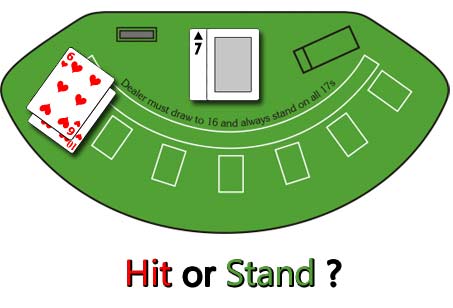
• The Scenario:
• The Question:
The dealer is showing an up card between 7 and A and you have a total of 16.
• The Question:
What is the optimal strategy in this scenario? Should you hit, stand, or double down?
- Answer 1 – Hit because the dealer could get close to 21.
- Answer 2 – Stand because you can easily bust with a total of 16.
- Answer 3 – Double Down because, hey it's only one more card.
The correct play here is to hit. Though you will bust many times with this strategy, more often than not – the dealer will end up with a hand higher than 16 and beat you if you stay pat. Doubling down is not recommended because you have to double your bet and the chances of busting are high. Most players hate 16 because it is the hardest hand to decide whether to hit or stand. More adventurous players always hit, while timid ones stand.